Remedial Designs

Following the results of the ex-situ analysis and ICP-MS verification, the team has proposed the following design alternatives.
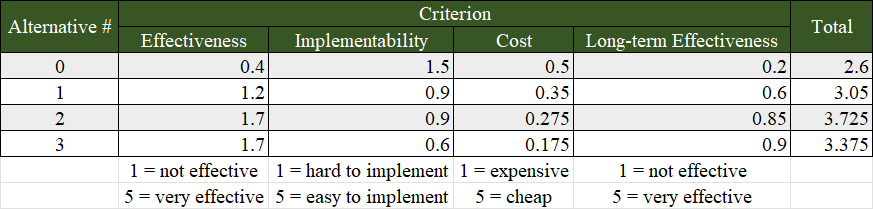
From here, an alternative was decided via a decision matrix for proposed implementation.

Alternative 0: No Action

No implementation of remedial actions at the site.

All existing structures are untouched.

This option serves as a baseline comparison.
The site will continue to pose a risk to human and ecological receptors.

No resource recovery is to occur.

Alternative 1: Capping-Based Containment

Reduces exposure via the containment of soils.

Caps are to be installed over DU1, 2, and 4 where contaminants are present.

Minimal resource recovery.
Isolates contamination and prevents migration of contaminants.

Alternative 2: Targeted Excavation w​ith Capping and Soil Washing

Targets the highest locations of contamination for excavation and soil rinsing.

Returns rinsed soil as backfill.

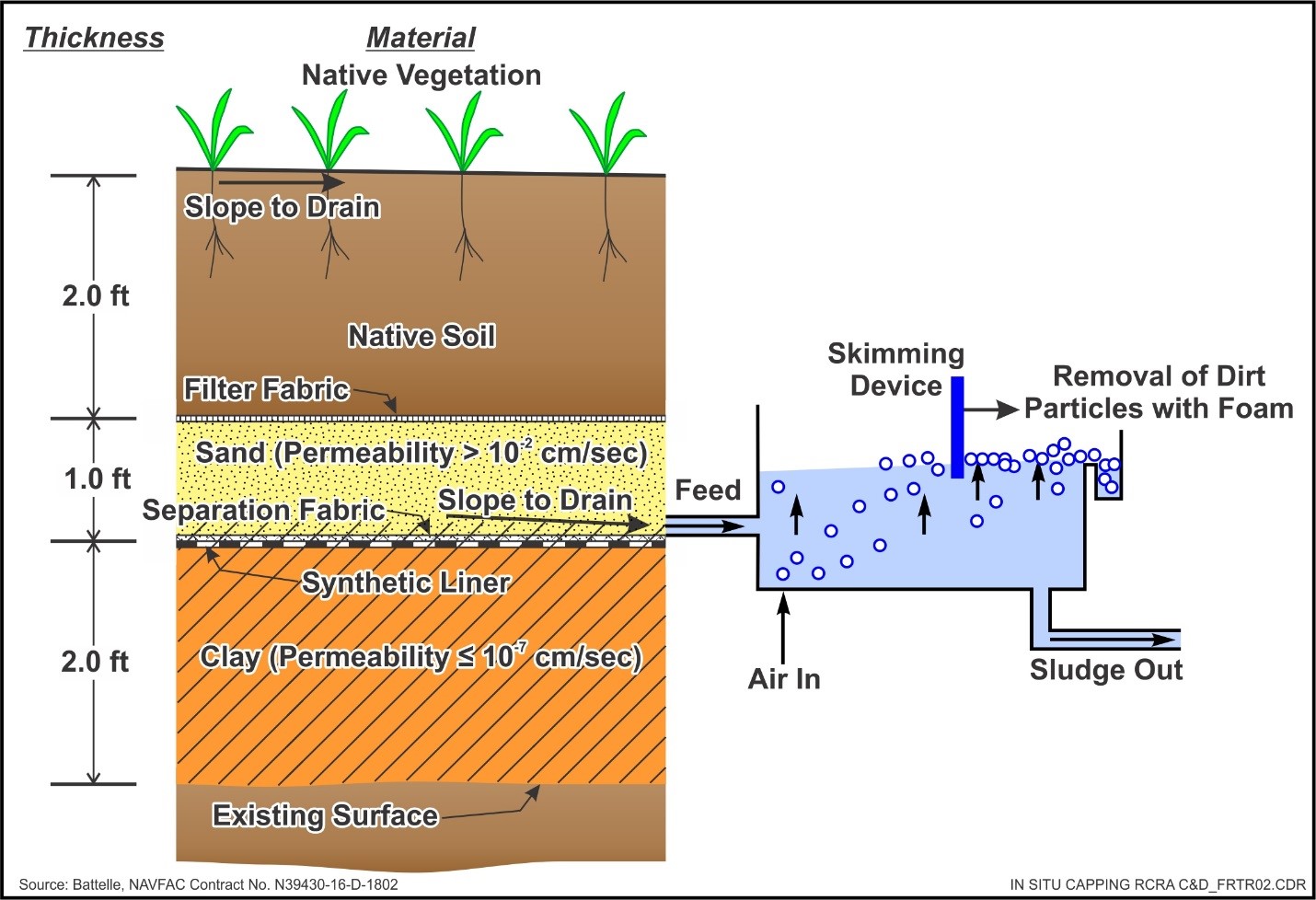
Remaining zones will be capped in the method displayed below.

Alternative 3: Enhanced Excavation and Consolidation with Capping

More extensive excavation including the hotspots from Alternative 2 and adding additional impacted soils.

Excavated materials are relocated to a containment zone with an engineered cap.

Remaining soil will have engineered caps installed.

Definitions of Remedial Technologies
Soil Excavation

The physical removal of contaminated soil from targeted areas. Allows for the reduction of localized contamination along with potential relocation.

Soil Washing

The processing of soil to remove contaminants from excavated soils to then either return the treated soil, or to relocate the soil to a containment zone.

Soil Capping

The placement of clean soil or material layers over contaminated areas to prohibit or reduce contamination migration.

The figure to the right contains an example of soil capping. This image was sourced from the Federal Remediation Technologies Round Table.
Alternative Decision Matrix
The table shown below is a display of the decision matrix utilized to select between the different design alternatives as described above.

Each member of the team scored the alternatives on a scale of one to five shown above, these values were then averaged and the weighting scale below was applied. 
Effectiveness (0.4), Implementability (0.3), Long-term Effectiveness (0.2), Cost (0.1)
Following the Decision Matrix the Alternative chosen is Alternative 2: Targeted Excavation w​ith Capping and Soil Washing