People · Advising · Documentation

Team & Docs

Team roster, advising support, project resources, acknowledgements, and selected references used for design and safety planning. Figures shown elsewhere on this site are team-produced or team-owned.

Team

Car Filter – Group 4

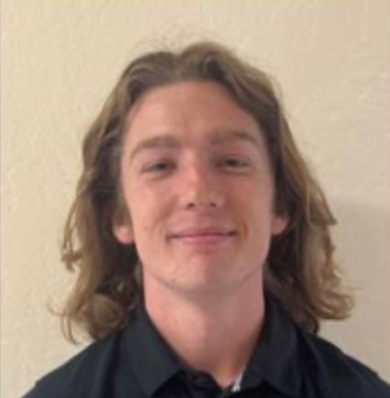
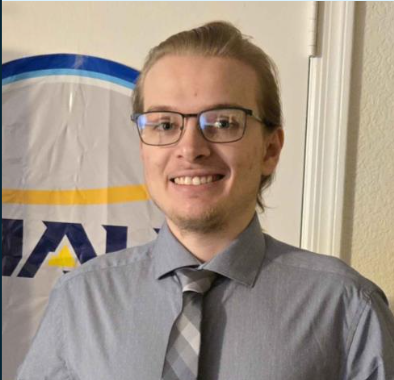
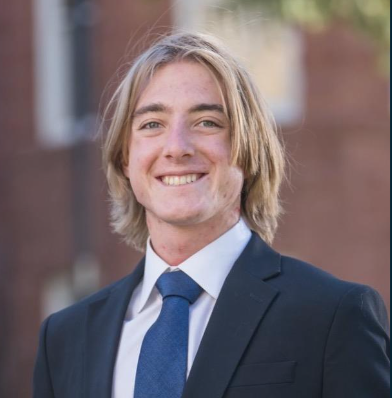
Roles reflect responsibility areas for design ownership, safety, documentation, and communication. Headshots follow the naming convention lowercase-firstname-head.png in the images/ folder.

Aden Weidner headshot

Aden Weidner

Team Lead

System integration, technical direction, milestone tracking, and sponsor-facing communication.

Ian Lipsey headshot

Ian Lipsey

Safety & Standards Lead

HV safety planning, standards alignment, test-area controls, and procedural compliance.

Jeriko Bautista headshot

Jeriko Bautista

Media Development

Visual documentation, photography/video, and content packaging for non-technical audiences.

Justin Meier headshot

Justin Meier

Digital Design Coordinator

Web presence, UI consistency, diagrams formatting, and documentation layout.

Jordan Strohmeyer headshot

Jordan Strohmeyer

Technical Analysis & Operations

Experimental workflow, lab operations coordination, and measurement/repeatability planning.

Faculty & Advising

Support and oversight

Faculty and graduate mentors provide technical oversight, safety guidance, and design review throughout the project.

Capstone Professor

Rodolfo Echavarria Solis

Deliverables, review cadence, and documentation expectations.

Graduate TA / Group Advisor

Michael Logan Garrett

Technical check-ins, safety guidance, and design review support.

Project Resources

What we draw from

Development is informed by high-voltage pulsed power references, discharge/plasma literature, and CO₂ conversion work relevant to nanosecond-pulsed discharges.

Technical inputs

HV pulsed power & measurement Pulse shaping & protection Discharge physics & kinetics CO₂ conversion literature Safety standards (IEEE/OSHA/ANSI) Pressure-vessel considerations (ASME) Dielectrics & insulation (ASTM)

Current work prioritizes a test platform and repeatable measurement workflow; performance claims are not a target for this stage.

Documentation artifacts

Current system diagrams are maintained on the Home/Progress pages. This page centralizes external references and credits.

  • System flow diagram (team-produced)
  • HV pulse driver diagram (team-produced)
  • Safety plan and standards mapping (in development)
  • Test plan template + bring-up checklist (planned)
Acknowledgements

Thanks and support

Sponsors and institutional support that enable the build, testing, and documentation.

Sponsors

J. Gorney and J. Rowland (RGH Innovations) — project sponsors and technical contributors.

NAU support

Steve Sanghi College of Engineering, Informatics, and Applied Sciences — laboratory facilities, instrumentation, and administrative support.

References

Selected references

Current-phase references are listed first, followed by background materials used earlier in the project.

Current phase (nanosecond / pulsed discharge)

  1. M. S. Bak, S.-K. Im, and M. A. Cappelli, “Nanosecond-Pulsed Discharge Plasma Splitting of Carbon Dioxide,” IEEE Transactions on Plasma Science, vol. 43, no. 4, pp. 1002–1007, Apr. 2015. doi: 10.1109/TPS.2015.2408344.
  2. S. Heijkers, L. M. Martini, G. Dilecce, P. Tosi, and A. Bogaerts, “Nanosecond Pulsed Discharge for CO₂ Conversion: Kinetic Modeling To Elucidate the Chemistry and Improve the Performance,” The Journal of Physical Chemistry C, vol. 123, no. 19, pp. 12104–12116, 2019. doi: 10.1021/acs.jpcc.9b01543.
  3. Q. Shen, A. Pikalev, F. J. J. Peeters, J. Gans, and M. C. M. van de Sanden, “Two-temperature model of the non-thermal chemical dissociation of CO₂,” Reaction Chemistry & Engineering, vol. 10, no. 1, pp. 146–157, 2025. doi: 10.1039/D4RE00300D.

Background (earlier project research)

  1. B. Bishop, “Background knowledge on construction of Van de Graaff generators,” wrbishop.com. Available: https://wrbishop.com.
  2. L. Li, H. Zhang, X. Li, and X. Kong, “Plasma-assisted CO₂ conversion in a gliding arc discharge: improving performance by optimizing the reactor design,” Journal of CO₂ Utilization, vol. 29, pp. 296–303, Jan. 2019. Available: PDF.
  3. G. Mogildea, M. Mogildea, C. Popa, and G. Chiritoi, “The assessment of carbon dioxide dissociation using a single-mode microwave plasma generator,” Molecules, vol. 25, no. 7, art. 1558, Mar. 2020. Available: PMC.
  4. M. H. Lietzke and C. M. Mullins, “Thermal decomposition of carbon dioxide,” J. Chem. Soc., Faraday Trans. 1, vol. 77, pp. 1147–1156, 1981. Available: ScienceDirect.
  5. S. Rayne, “Carbon dioxide splitting: a summary of the peer-reviewed scientific literature,” Nature Precedings, Apr. 2008, doi: 10.1038/npre.2008.1741.2. Available: PDF.
  6. M. Pawlikowski, “Dissociation of CO₂ into C and O₂,” Austin Environmental Sciences, vol. 7, art. 1067, 2022. Available: PDF.
  7. U.S. Department of Transportation, Freight Analysis Framework: Version 3. Washington, D.C., USA: DOT, 2009. Available: ROSA P.
  8. IEEE Std 4-2013, IEEE Standard for High-Voltage Testing Techniques. New York, NY, USA: IEEE, 2013. Available: IEEE Xplore.
  9. L. Xu, F. Li, and Y. Fu, “Carbon dioxide dissociation in a low-pressure microwave plasma,” J. Phys. Chem. Lett., vol. 1, no. 19, pp. 2836–2840, Oct. 2010, doi: 10.1021/jz101005u. Available: PDF.