Project Abstract
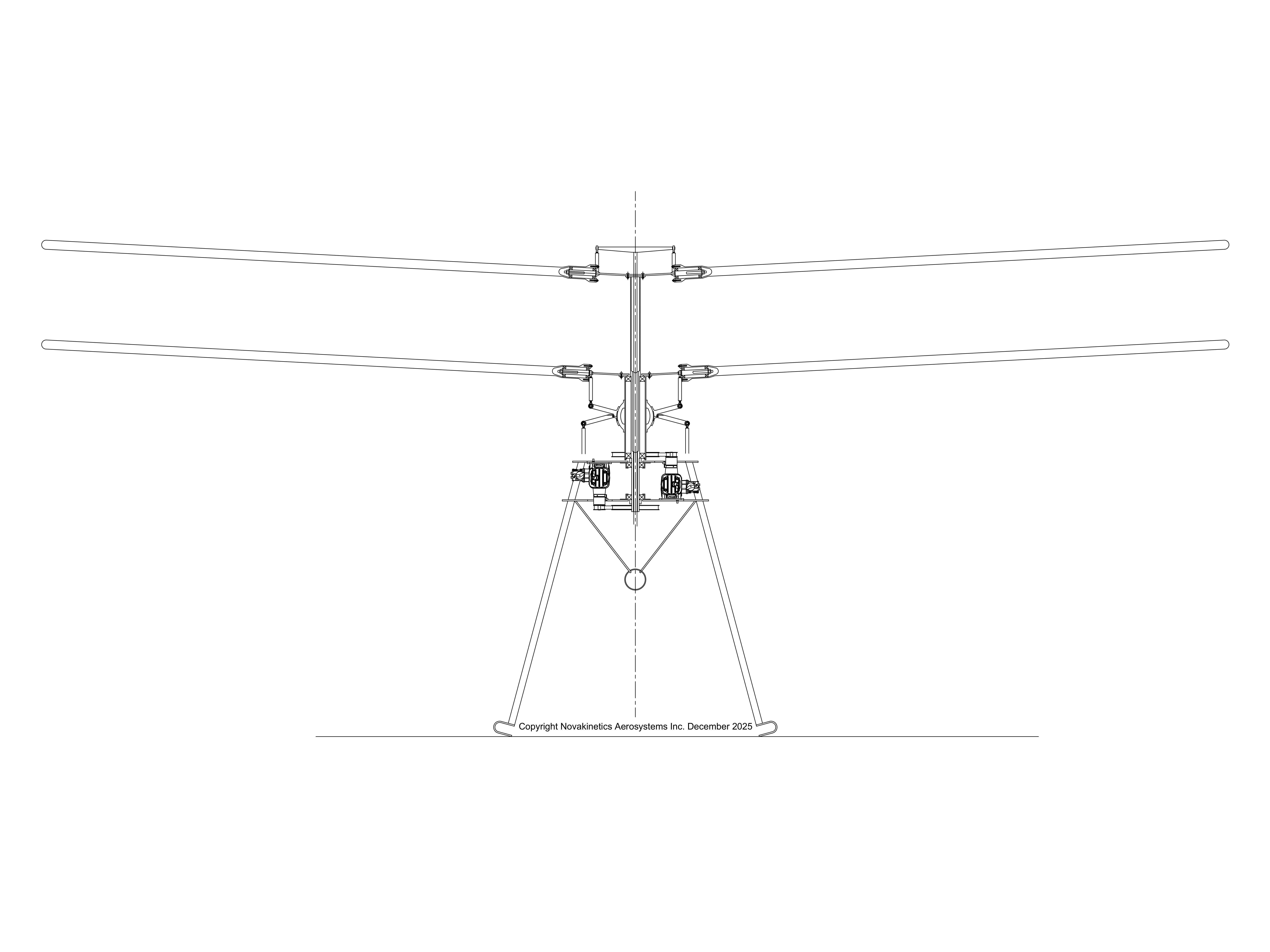
This project focuses on the design and development of a heavy-lift unmanned aerial vehicle (UAV) for the 2026 DARPA Lift Challenge. The primary objective is to create a system capable of achieving a high payload-to-weight ratio, with a target of lifting up to 220 pounds while maintaining a total system weight of 55 pounds or less. The project is motivated by the need for more efficient UAV platforms in applications such as logistics, disaster response, and remote material delivery, where current systems are limited by payload capacity. The overall system concept centers around a coaxial rotor configuration to maximize lift efficiency while maintaining stability and compact design. Key areas of development include structural material selection, propulsion and rotor performance, and the design of a reliable flight control system capable of maintaining stable and controlled flight under varying conditions. Additionally, the project incorporates a modular design approach, allowing for interchangeable landing gear configurations to support different mission requirements such as material transport, surveillance, and rescue operations. The primary deliverables for this project include detailed design documentation, computational analysis, and initial prototyping of key subsystems. Validation methods such as computational fluid dynamics (CFD), structural stress analysis, and control system modeling are used to ensure the system meets performance expectations. Project success is evaluated based on the UAV’s ability to meet defined performance targets, including payload capacity, flight endurance, operational range, and system stability.
Latest Updates
- March 2026: Completed structural analysis and material selection.
- February 2026: Initial prototype design finalized.
- January 2026: Project kickoff and requirements gathering.