

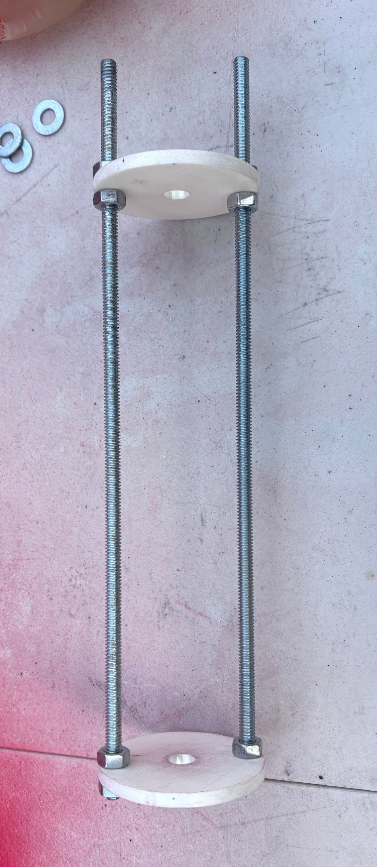
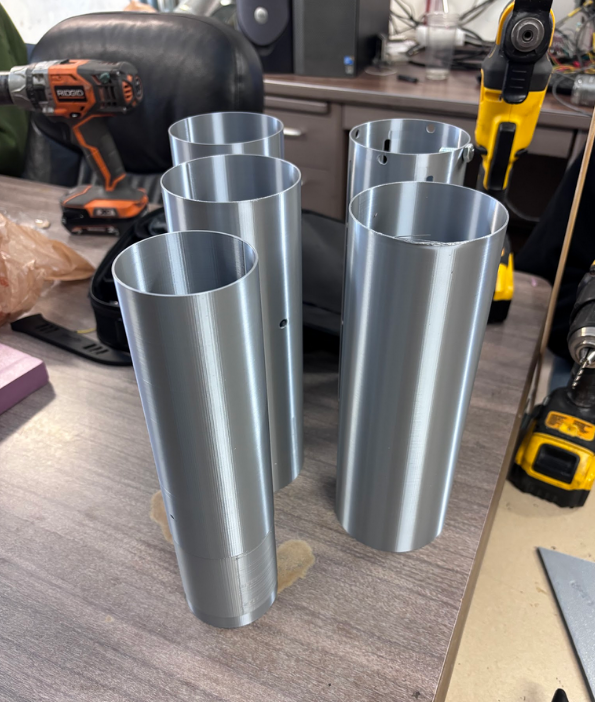
Our prototype sought out to be a physical compilation, containing main subsystems like the housing capsule, rocket body, and Flight Computer to actualize dimensions and fitment to eventually perform a test launch on 13 December 2025. This was to answer the question: What are the appropriate dimensions needed to adequately fit all of the housing components? Below are photos of the subsystems worked on during this prototype phase.
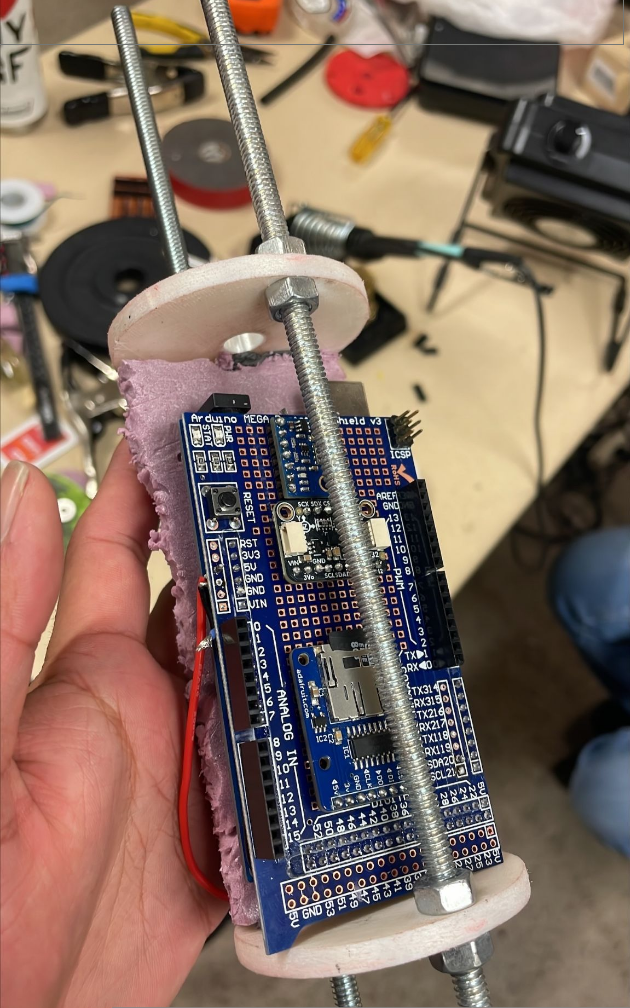
Flight Computer
Housing Capsule
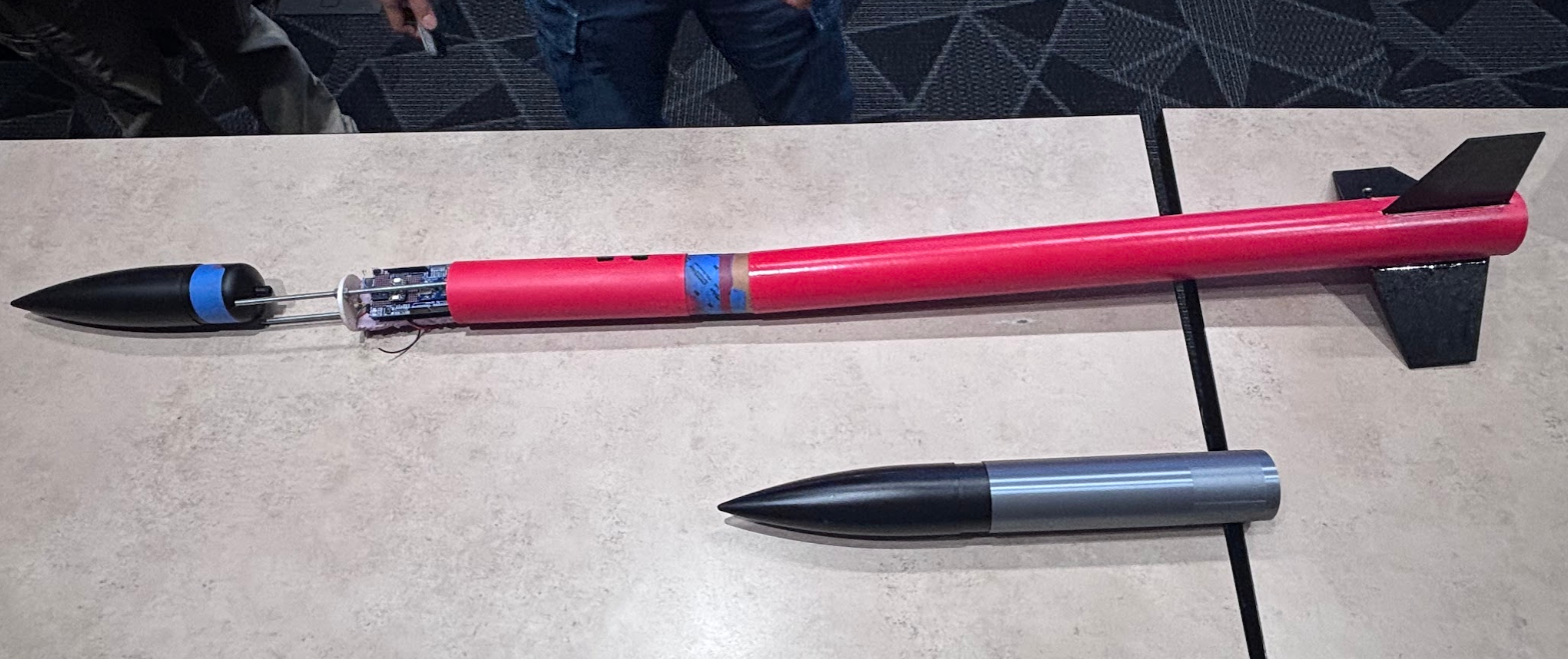
Prototype 1 & 2 Assembly All Parts
These components were then fitted into the first assembly of the rocket body. With fitment being a success, the plan moving forward for future iterations is improving the sensor implementation of the Flight Computer, utilizing more fin simulation within RockSim and FEA software analysis for our future launch.
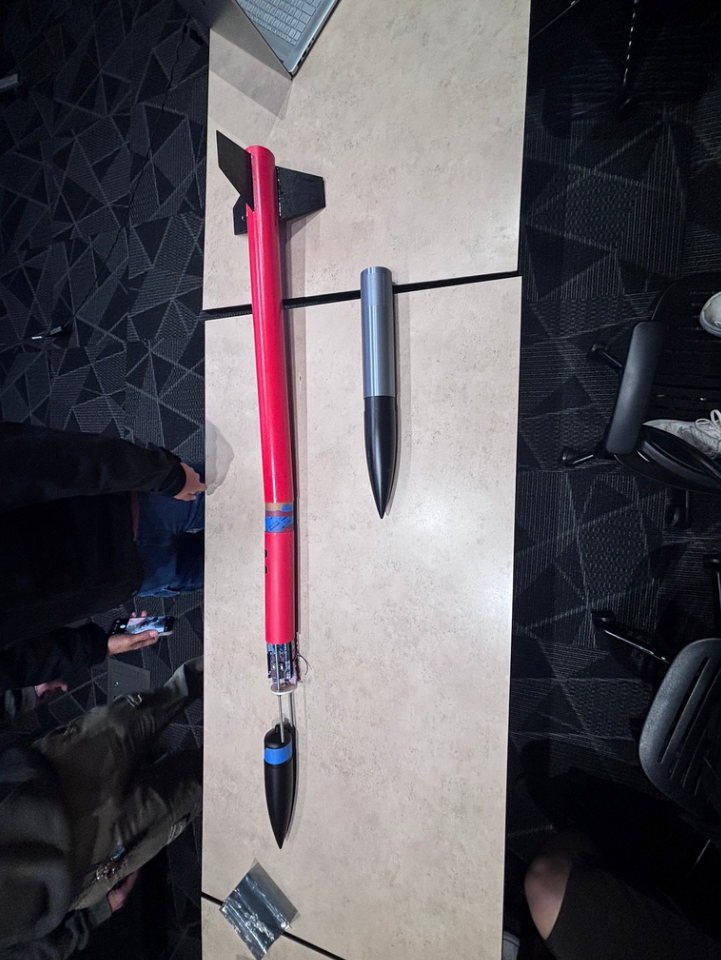
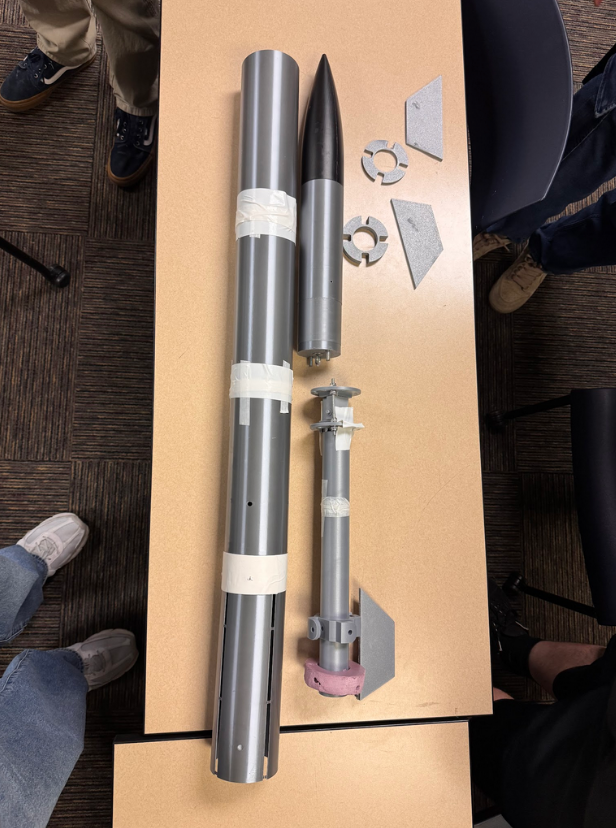
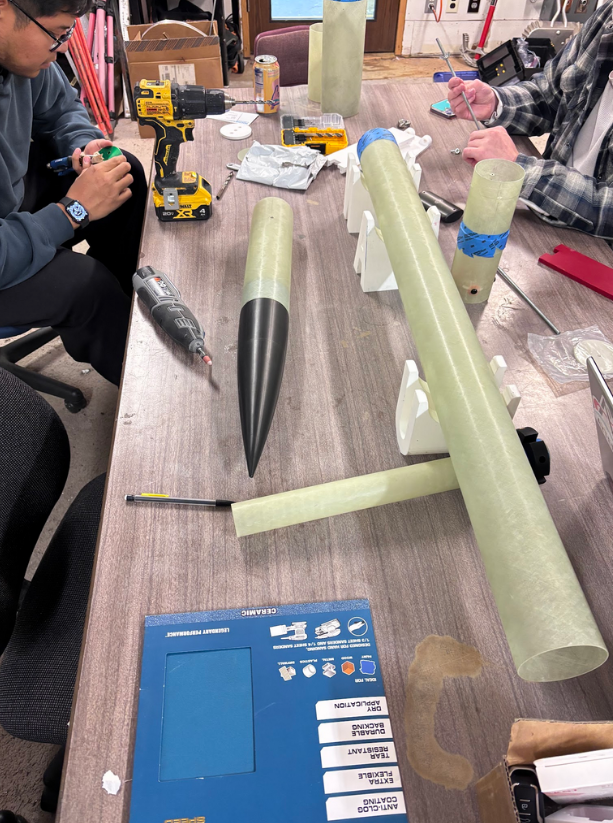
This is a short gallery to depict the development leading up to our 50% build progress report. More documentation on our 50% build is available in our work page.
Our final build sought out to meet the design requirements of our project, namely regarding the flight computer and active fin system. This final build implements the active fin servos and flight computer subsystem, while adding a camera to supplement logging data during launch.
Final Rocket at Tripoli Launch Site, Wickenburg, AZ
Final Flight Computer, with new bay, LED indicator, and refined wiring
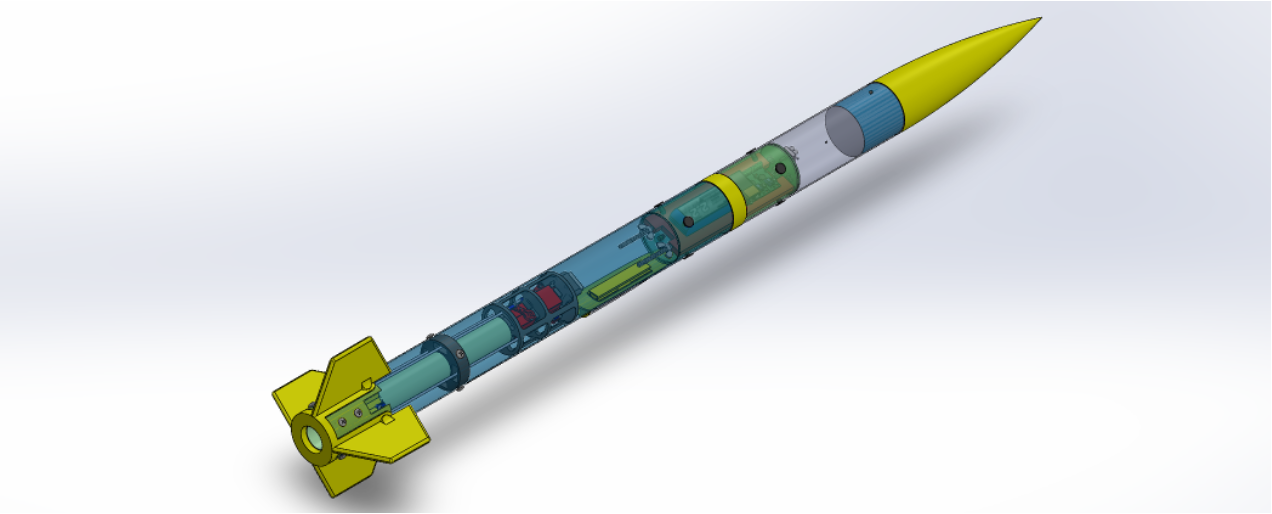
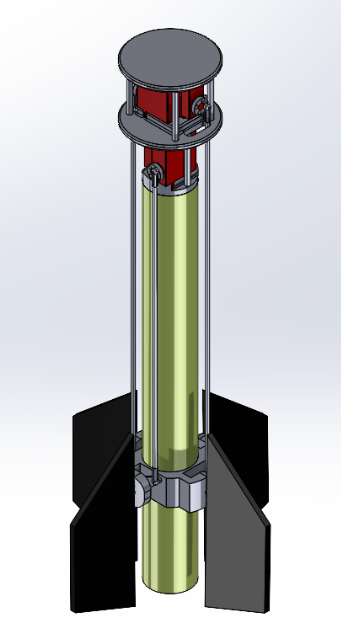
The SolidWorks assembly here uses a transparent view to represent the subsystems fitted into the rocket body. Representative of the real product, colors are blue and yellow to represent Northern Arizona University and the Steve Sanghi College of Engineering.
This is a preview of the CAD drawing for our assembly. Download access is available to view all parts.
